
Perched on the edge of the Hamilton Escarpment (“Hamilton Mountain”), the Chedoke Hospital site is where local history is etched into the stone. These lands became desperate protection against Tuberculosis, a national epidemic. Evolving into a beacon of hope filled with ghostly secrets.
The name “Chedoke” carries mystery. Derived from the long creek that carves through Hamilton. While some dismiss the title as a mispronunciation of “Seven Oaks”, named for a cluster of trees once near Fennell Ave and Garth Street. A better theory suggests it is an Native term meaning “Big Healing Place”. Poignant given the site’s 1906 origins as the “Mountain Sanatorium”.
Yet, a century of life and death left behind more than just ruins. From humble beginnings in canvas tents to becoming a leading medical facility in Canada. Chedoke’s legacy is a mix of care and tragedy.

by Ghost Guide Daniel
..: Quick Links :..
Name Origin | Tuberculosis History | Secret Ghosts

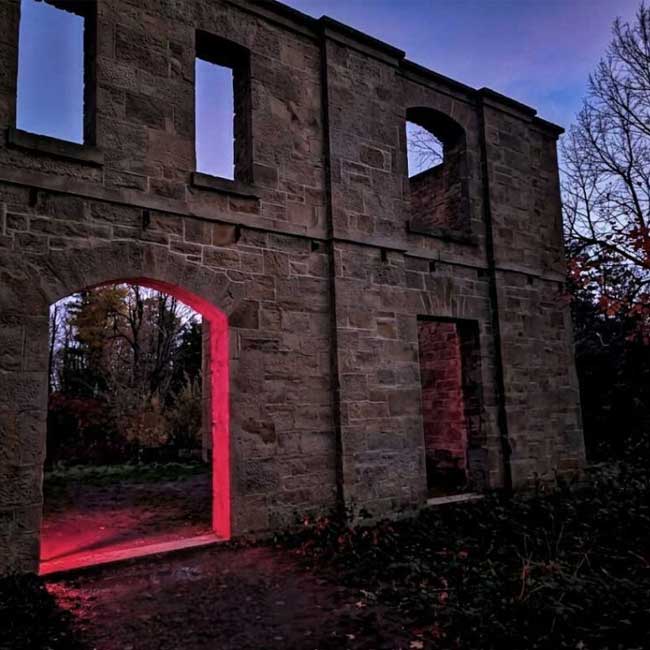
Legendary Hermitage Ruins
Walk the Haunted Woods not far from the Chedoke site. Our most unique tour!
*This site is not far from the Legendary Hermitage Ruins. Join us for Tours into the Dark and Haunted Woods*
Chedoke Hospital Strange Start
Perched atop the Mountain at the end of a scenic route. The Chedoke Hospital site is a place where history is woven into the stone of the Escarpment (aka “Hamilton Mountain”).
What began as a quick response to an epidemic, became a sprawling complex defined by great care and ghostly secrets.
Origins of the name, “Chedoke”
The hospital takes its name from Chedoke Creek. An impressive waterway carving through the property into Hamilton below.
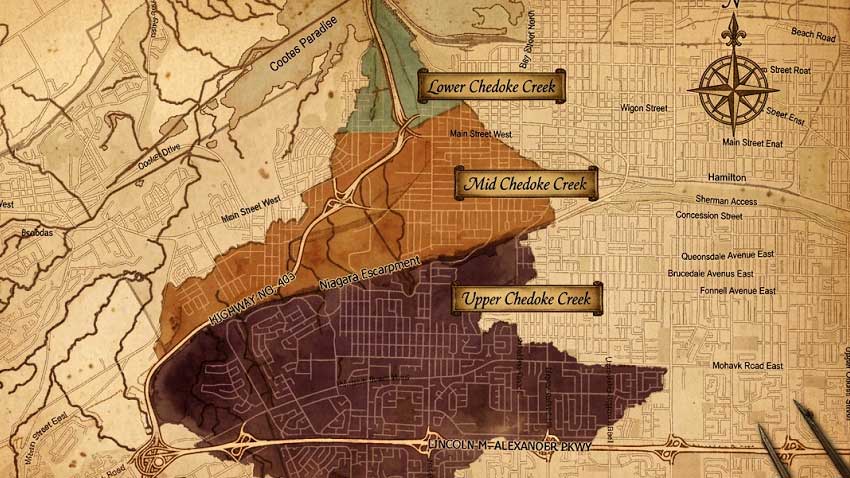
While the origin of the creek’s name is debated. Two theories prevail.
Some believe it is a Native term meaning “Big Healing Place”. Fitting name for a sanatorium.
Hence Sanatorium Road, leading from Mohawk Road (the historic pathway dating back to the Algonquian and Iroquois people). And Sanatorium was the name used for facilities dedicated to the long-term care of tuberculosis patients.
The deeper, or alternative, origin is boring. A mispronunciation of “Seven Oaks”.
Chedoke … Seven Oaks. Makes sense.
Dating to early European settlers using “Seven Oaks” to make the region near Fennel Ave & Garth Street. Simply … they found seven large Oak Trees.
Both are possible, but the early carries a better historical weight.
Tuberculosis Consumes the People
Established on a 120-acre property, the Chedoke facility began with humble roots. Just two tents and eight patients.
In 1906, tuberculosis ravaged Canada. Hamilton’s “Mountain Sanatorium” opened its doors as only the fourth place of its kind in Canada.
At the time, medical science had little weapons against this disease. A brutal sickness known also as “consumption”. Due to its effect of wasting away the person’s weight and muscles.
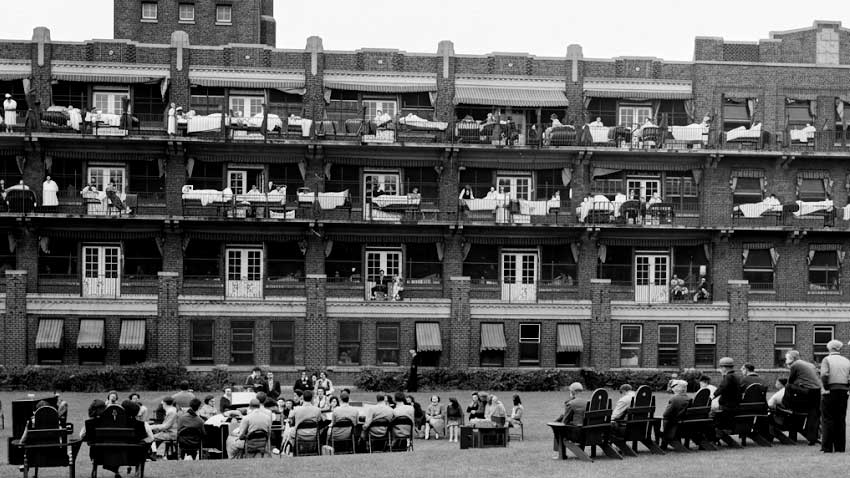
Death was slow and painful, some patients being confined to Chedoke for months or even years, before their lungs gave out with the relief of death.
The primary remedies of the time included …
- Constant fresh air
- Rigorous exercise (often in the form of farmwork)
- Holistic care involves sunlight and being plunged into cold and hot water.
By 1919, the medical industry shifted its full attention to this sickness.
Chedoke expanded, earning a reputation as one of the best facilities in all of Ontario.
Following World War II, it evolved. Adding maternity, pediatrics, and psychiatric wards to its leading Tuberculosis wing.
Time Ruins Chedoke Hospital
Despite a once prestigious reputation, the reality of care inside Chedoke didn’t always meet modern standards.
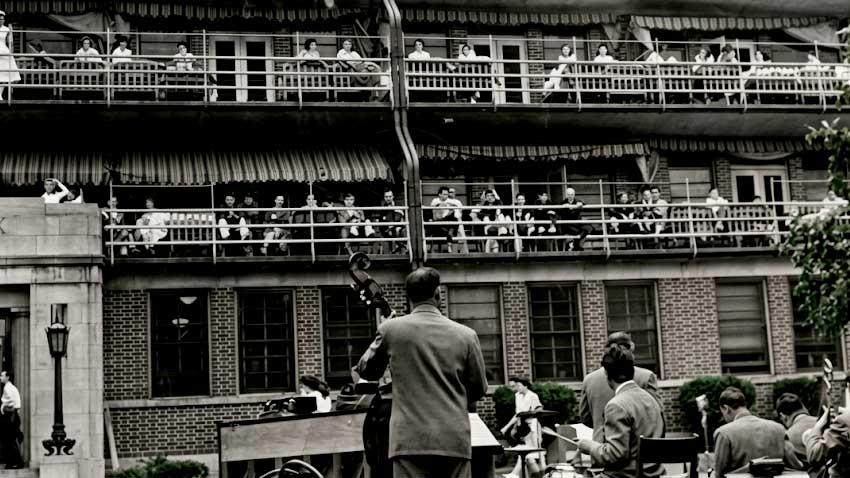
By the 1980s, the Hamilton Spectator published editorials describing the facility as “inadequate”. Calling the rooms “small and dingy”. Adequate for a short stay, but a grim way to survive.
Darker still were allegations of patient abuse. Many surfaced over the years.
These reports highlighted mistreatment of Native patients, partly due to language barriers and discrimination. Ironically casting a shadow over the “Big Healing Place”.
By the 2000s, the original 1906 Tuberculosis Wing was abandoned and demolished. Parts being integrated into newer facilities on the same land.
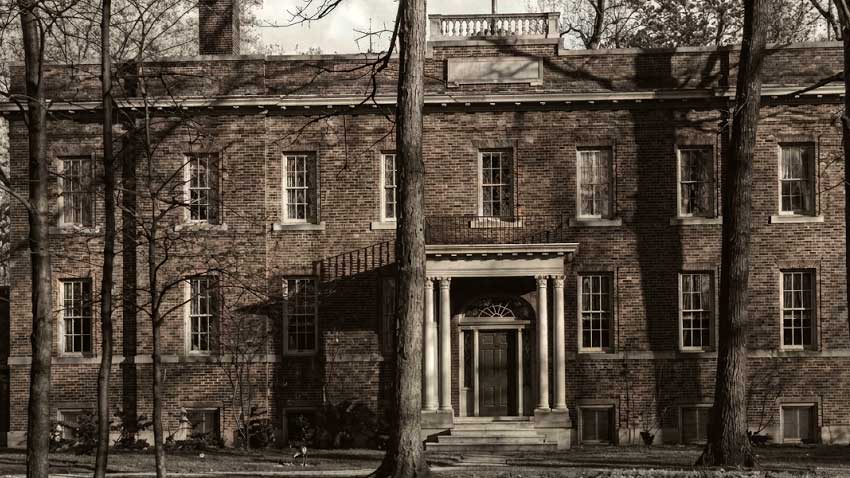
However, the Long & Bisby Building remains. A 1920’s Nurse Residence Building later used for returning WWI soldiers who had contracted Tuberculosis. Was closed up in 2014 but unlike the 1906 structure, it remains standing. With hopeful plans for the future.
A Ghostly Residue
Hospitals are notoriously quiet about the paranormal. Makes sense. Due to the sensitivities around constant tragedy. Silence is better.
But at Chedoke, the stories span generations and are hard to ignore. Including…
- The Young Girl. Fitting for a site that housed an active children’s ward. Many visitors over the years saw a little girl wandering the former pediatric ward.
- A Lady in White. The staple of Hamilton ghost folklore, such as resident ghosts at Downtown Hamilton’s Royal Connaught and inside Tuckett’s Tower of the Scottish Rite of Freemasonry.
- Chedoke’s Lady in White is a bit different. Trading in a long Victorian dress for the old fashion white dress uniforms of vintage nurses.
- The Doctor. Reports of a spectral figure in the operating rooms. Given the high-energy and emotion inherent to critical surgery. Many believe this is only residual energy, or an echo of the men trying to save lives so long ago.
Chedoke has a complicated history. A place rooted in the past and future at once. Showing off the best healing available for the suffering for well over a century.
And today a landmark of progress that remains on Hamilton Mountain.
Legendary Hermitage Ruins
Walk the Haunted Woods not far from the Chedoke site. Our most unique tour!