
Long before the “shambling, deformed monsters” of early European folklore became cinematic icons. Like Dracula. Vlad Tepes (Vlad the Impaler) was a living nightmare for his enemies.
Born in 1431 in a region of modern-day Romania not far from Transylvania. Vlad was the Prince of Wallachia during one of the most violent eras of human history.
While his reign was short-lived, his reputation has achieved dark immortality. Lasting over 600 years.
But how much of the Count Dracula we know today is based on fact, and how much is propaganda?
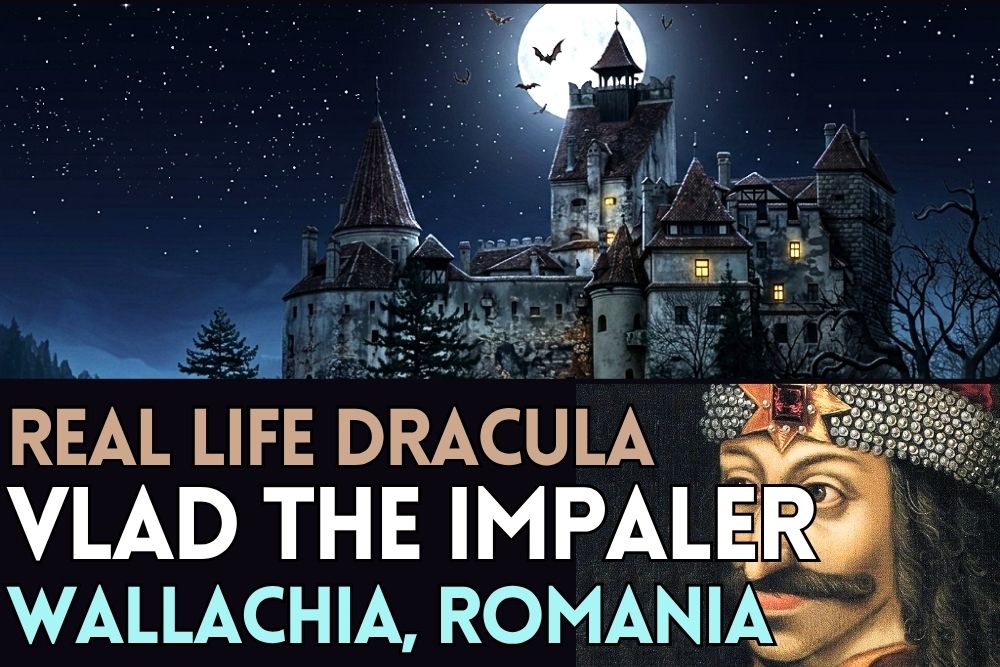
by Ghost Guide Daniel
..: Quick Links :..
Dracula | Origin of Vlad | Tyrant’s Rein | Death

Origin of Count Dracula
Anne Rice famously coined the phrase “born into darkness”. But before her charismatic, brooding vampires took over pop culture, there was the historical Dracula.
Unlike the shambling, deformed monsters of early folklore. The real Vlad III was a deadly, charismatic figure with immense power.
Vlad Tepes was also born into darkness in 1431.
As Prince of Wallachia in the 15th century. A volatile region in modern-day Romania. And although his reign was short. His reputation remained immortal for 600 years.
Bram Stoker Made Vlad Legendary
We owe much of this infamy to a former actor’s assistant.
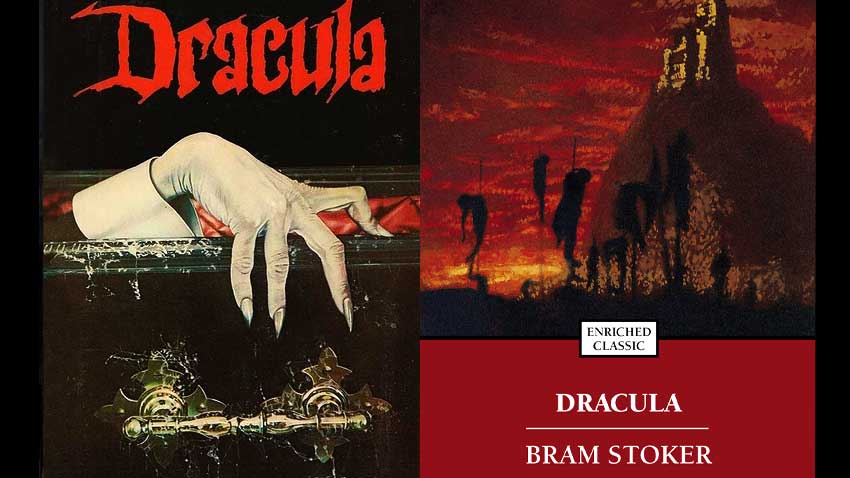
Bram Stoker wrote Dracula in 1897 after spending time with a Hungarian traveler named Arminius Vambery. Vambery’s stories inspired Stoker so deeply.
Some consider Vambery the real-life inspiration for Van Helsing!
While Stoker later claimed he knew nothing of the historical Vlad and never visited the infamous Bran or Poenari Castles. The coincidences are too striking! Such as…
- The Name: “Dracula” is a Slavonic genitive meaning “Son of the Dragon”. This was Vlad’s nickname, as his father was known as Dracul (or the Dragon).
- How about the Setting? Vlad’s Bran Castle is in Transylvania. The fictional home of Stoker’s Count Dracula.
- Maybe the Weapon! In Dracula, the wooden stake is the Vampire Hunter’s weapon of choice. And in history, the stake was Vlad’s tool of execution.
The Art of Impalement
Warning: Graphic content ahead
Vlad earned his nickname, “The Impaler”, through a gruesome method of execution. Serving him as psychological warfare.
The process was cruel. A victim is laid out before a wooden stake, often longer than a man is tall.
A sharpened end is positioned against the body, and horses were used to slowly pull the victim onto the pole.
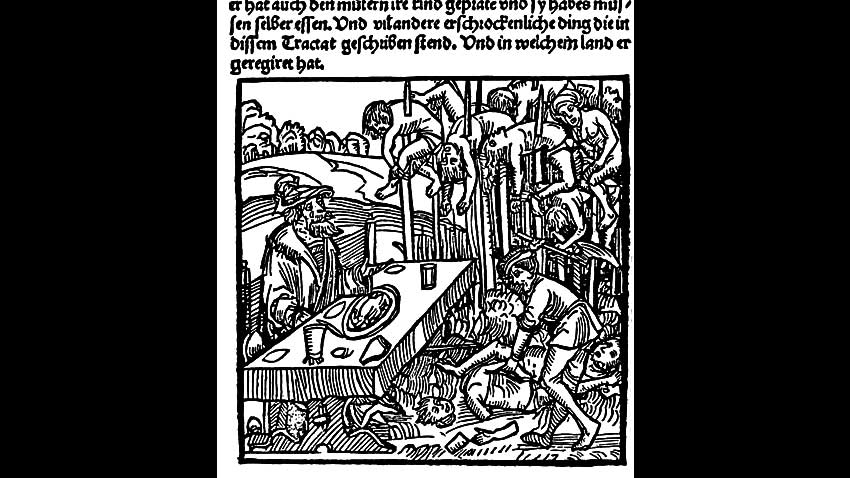
The stake then hoisted upright and dropped into a hole, leaving the victim balanced atop it through the obvious entry point (don’t make me say it).
Gravity did the rest.
Over the course of hours or even days. The body slowly slid down the post. It was an agonizing, slow-motion death that often ended with the stake emerging from the victim’s mouth.
It was rumored Vlad set a table on the battlefield, enjoying a meal while surrounded by a “forest” of the dying. Although this may only be propaganda.
The Making of a Dragon
To understand the man, we must look at his bloodline.
Vlad was the grandson of Mircea the Elder. Considered one of the bravest Christian princes of that era (14th Century).
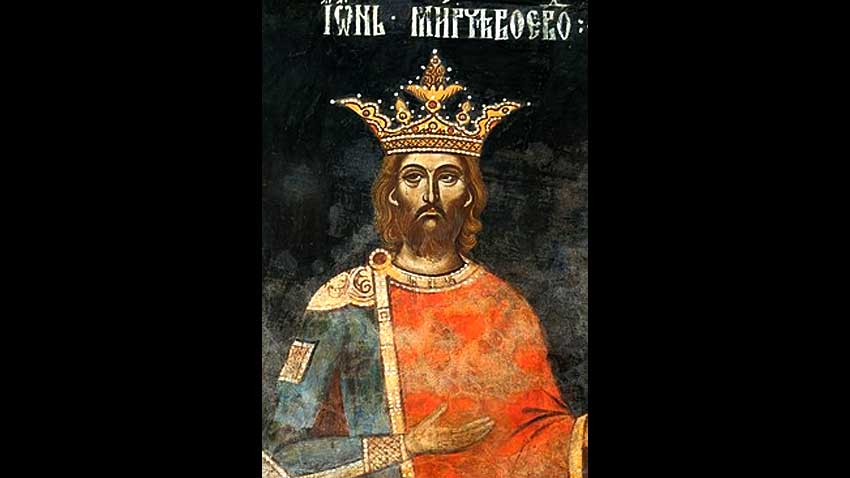
However, constant warfare turned Vlad’s childhood home into a slaughterhouse.
Leading to Vlad’s father joined the Order of the Dragon. A group dedicated to uniting Christian nations against the massive Ottoman Empire.
This is where the name “Dracul” originated. In 1431, the year Vlad the Son (Impaler) was born, his father was made King of Wallachia (neighboring region to Transylvania).
Peace was fragile. To ensure a truce, Vlad’s father gave up his two sons, Vlad and Radu, as hostages to the Ottoman Sultan.
During his years of captivity, Vlad was mistreated, whipped, and insulted daily. All while his brother Radu assimilated to the Ottomans, earning the Sultan’s favor.
But Vlad grew to harbor a cold hatred for his captors, along with a deep resentment of his father. He felt “Dracul” had betrayed the Order.
Hero-Monster of Wallachia
Vlad became a hero to many Romanian people. But a demon to everyone else.
When he finally took the throne, he was obsessed with Order of the Dragon. Effectively eliminating crime through terror.
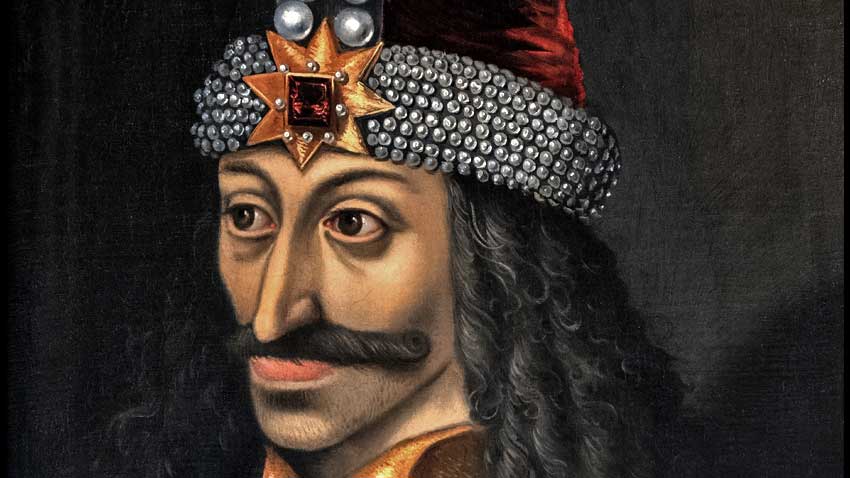
Legend has it … a traveler could leave a golden cup at a public fountain and return the next day to find it untouched. Everyone was terrified of the stake to steal it.
The Midnight Party at Poenari
A great example was one of his most famous acts of vengeance. Involving the noblemen who had betrayed his father and brother.
Vlad invited them to a lavish feast at his home. The noblemen and their families felt calm and were about the leave when Vlad’s soldiers marched in.
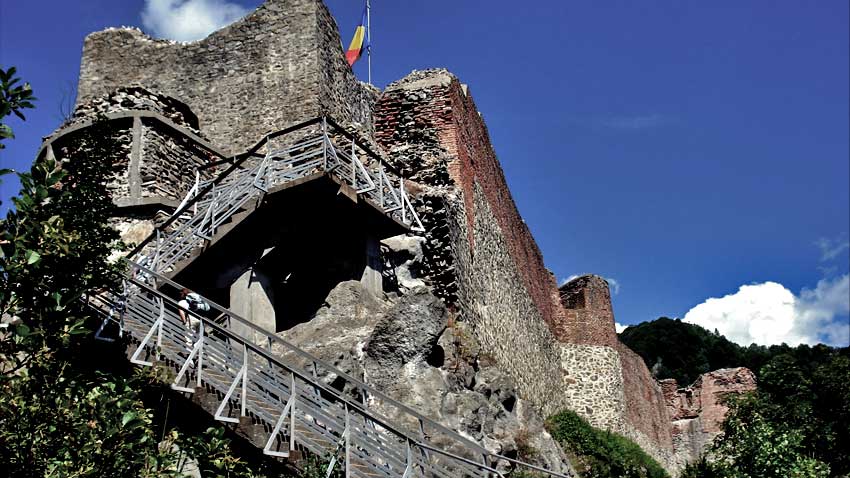
The old and frail were taken away to be impaled. And the able-bodied guests were marched away in chains to the ruins of Poenari Castle.
The once ruling elite of Wallachia became Vlad’s slaves. It took years to recreate the old castle befitting Vlad’s high standard. Rebuilding the fortress until their clothes fell off their starved bodies.
Most worked until they dropped dead.
End of the Impaler
Vlad’s downfall began in the 1460s. During a massive Ottoman invasion.
Despite using brilliant guerrilla tactics. Beautifully dramatized in the opening of Francis Ford Coppola’s movie Dracula.
Vlad was forced into exile.
He spent 13 years in captivity. Historians debate his escape to this day. Some believing Vlad converted to Catholicism to gain the Vatican’s support.
The Vatican opposed the Ottoman Empire and were more than happy to help. If true, this is a bad look … helping the brutal, murderous leader.
And it worked. Vlad successfully reclaimed his throne in 1476. A short-lived victory.
The Ottomans invaded Wallachia and Vlad gathered a small army. Marching out to meet them. He didn’t return.
Mysterious Death & Missing Grave
Talk of Vlad’s death happens to this day.
Some say he was betrayed by his own men. His body was reportedly found and decapitated. His head preserved in honey and sent to the Sultan as proof Vlad the Impaler was finally dead.
Eventually, his headless body was said to be buried at Snagov Monastery in Bucharest.
Hundreds of years later, in the 1930s. Excavators opened his supposed grave.
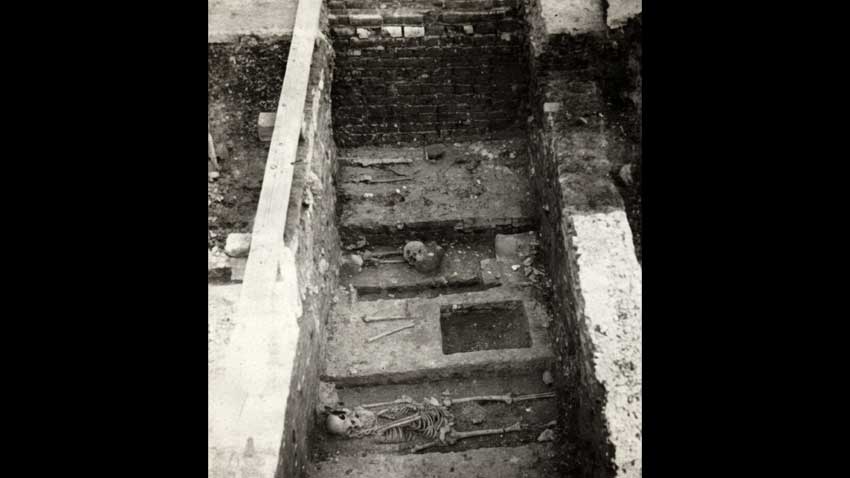
They found two graves inside. One was empty. The other contained a headless corpse.
Some believe the empty grave was Vlad’s. That his body was moved to prevent desecration. Or the headless corpse in the second grave was him.
Or perhaps, that’s exactly what a vampire wants you to think!
As he loved propaganda. Dark, visceral violence cemented Vlad’s reputation.
As 15th century Romania was a land forged in brutality. Vlad is a historical figure with many historians arguing that his “atrocities” were pure propaganda. A necessary, extreme, response to the chaos of medieval warfare. Against a massive foe.
To a modern observer these stories are revolting. But to Vlad they were a survival strategy.
Is Vlad the Impaler a Vampire
Or, as many believe … the empty grave was his. And he rose from the dead!
Bram Stoker was a man of science and logic. Yet he couldn’t resist the dark magnetism of Vlad’s history.
In the end, it must be fiction. It’s not possible to sustain life without a beating heart. To live off another’s blood. Be immortal and not die. It has to be fiction … right?