
Toronto’s Elgin & Winter Garden isn’t just another theatre. It’s the last surviving double‑decker playhouse on Earth. A vertical marvel where two completely different worlds were once stacked seven levels high.
With the Elgin, all red‑velvet traditional elegance. Above floated the Winter Garden, a dreamlike forest of hand‑painted murals and preserved beech branches.
But this story is far stranger than you think! These twin theatres lived parallel lives through Vaudeville’s rise, the decline of Yonge‑Dundas, and a half‑century of abandonment that left the Winter Garden a time capsule.
Its restoration led to a Chicago import with a dark twist. Related to the Depression Era’s most infamous American bank robber. And discovering ghosts, like the Lavender Lady and Sam the Musician.
..: Quick Links :..
VAUDEVILLE | DECLINE | RESTORED | THE CHAIR | GHOST


Dundas Ghost Walks
Join us for our Ghost Walks in the historic (and haunted) Town of Dundas.
Toronto’s Elgin & Winter Garden Theatre
This is more than a historic landmark. It’s a (now) one-of-a-kind architectural marvel. Standing today as the world’s last surviving “double‑decker” theatre. A stacked pair of performance halls rising seven levels within a single structure.
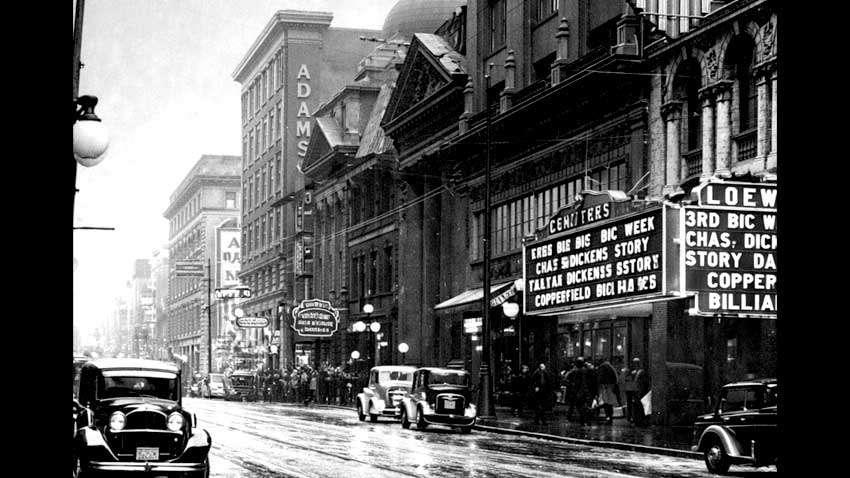
Only a handful of these vertical twins were ever built.
Its closest sibling was the Century & Valencia in Baltimore, USA. Sadly, was demolished in the 1950s during the Charles Center redevelopment project.
Leaving Toronto’s pair as the final one of this theatrical experiment.
Tale of Two Theatres
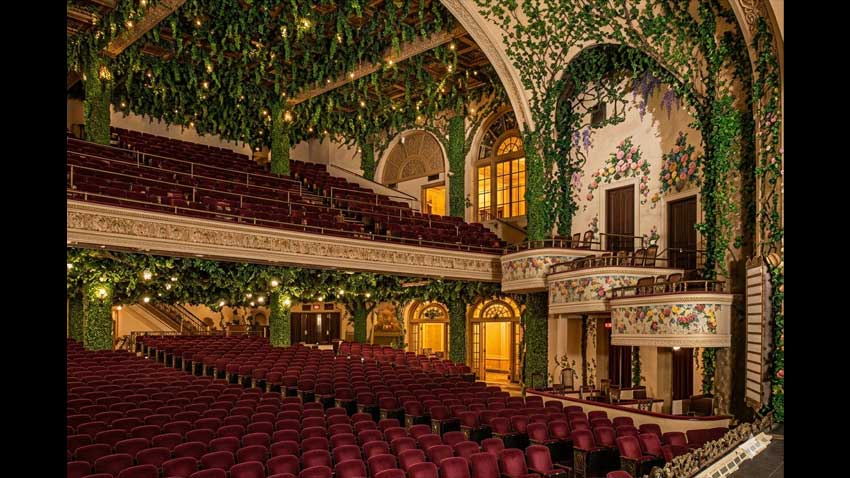
The lower house is the Elgin Theatre. Designed for the masses to experience entertainment in red velvet, formal and traditional elegance.
Above it is the Winter Garden Theatre. A whimsical botanical fantasy. Its walls with hand‑painted garden murals. And its ceiling shimmered with more than 5,000 preserved beech branches and silk blossoms. Creating the illusion of performing outdoors in an enchanted forest.
Vaudeville’s Alive
During the Vaudeville era, the two theatres served different worlds.
The Winter Garden held Big Time Vaudeville. Exclusive shows with reserved seating and higher ticket prices. Limited to only two performances a day.
This is where the biggest stars of the early 1900s took the stage. Names you may know today like … George Burns, Gracie Allen and Milton Berle.
The Elgin, meanwhile, was the home of Small Time Vaudeville. Cheaper, continuous shows where audiences wandered in and out at will. General seating, over-and-over, all day long.
Theatre Frozen in Time
Sadly, in 1928 the Winter Garden closed its doors.
Unlike many theatres gutted, modernized or demolished, it was simply locked up and left untouched like a time capsule.
The Elgin continued. Jumping into the “new” technology called “the moving picture. Reopening as a movie house as the Winter Garden stayed silent, dusty, and preserved
That lasted for over 50 years! Watching the area around it (Yonge-Dundas Square) roller coaster.
Yonge-Dundas’ Decline
The decline of the Yonge–Dundas district didn’t happen overnight.
It unfolded over decades, shaped by a shifting entertainment culture. Along with aging infrastructure and the erosion of the district’s identity.
Through the 1970s and 1980s, it became known for its gritty, adult‑oriented nightlife.
The strip was lined with taverns, jazz clubs, greasy spoons, late‑night eateries, and adult entertainment venues. It was lively, raw, and unmistakably urban. Or as one source said, “…a dose of gritty Toronto”.
In 1977, right beside the district is what started out as the Canada’s largest indoor mall. Pulling business away from the shops and restaurants along Yonge Street.
Leading to the area lacking cohesion, identity, and modern infrastructure (popular in the 1970s-80s).
It was busy but not thriving. And out of sync with Toronto’s modern development.
Niagara-on-the-Lake Tours
Discover the darker side of Canada’s Most Haunted & Ontario’s Oldest Town.
Winter Garden is Back!
By the 1980s, the entire building (Elgin too) was deteriorating. Then the city said, “We must save Yonge-Dundas”. Parallelling the comeback of Times Square in New York City.
The theatre’s salvation came not from nostalgia, but rarity. As the last double‑decker theatre on Earth.
The restoration revealed a breathtaking time capsule. Inside the Winter Garden, workers uncovered over 120 original Vaudeville backdrops. It became the largest original collection of its kind in the entire world.
Fun Fact … They bought over 1,500 pounds of bread dough. No, not to make bread.
Instead, it was a most unusual conservation effort. As crews used the dough to gently lift soot from the delicate watercolor murals on the Winter Garden walls.
Bank Robber’s Chair
Here’s where our history takes an unexpected turn. With the “Death Chair” of infamous American Bank Robber, John Dillinger.
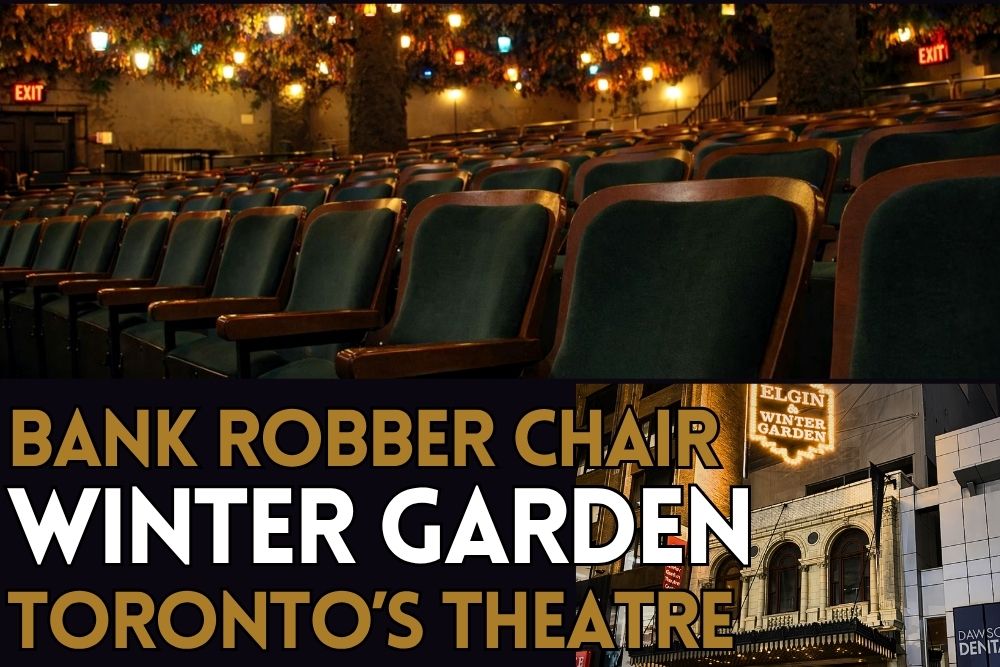
The seats in the Winter Garden Theatre today are not the originals. Those were sold off in the 1950s to make a little money for the structure.
During the renovations, the theatre needed replacements. A call went out for vintage seating. And the answer came from Chicago’s Biograph Theatre. Which, at the time, was being converted into a multiplex movie theatre.
The seats dated back to 1914! But were in great shape. What a deal!
John Dillinger
They were also the seats during that night in 1934 when John Dillinger went in to watch, “Manhattan Melodrama”. A, ironically, gangster movie staring Clark Gable.
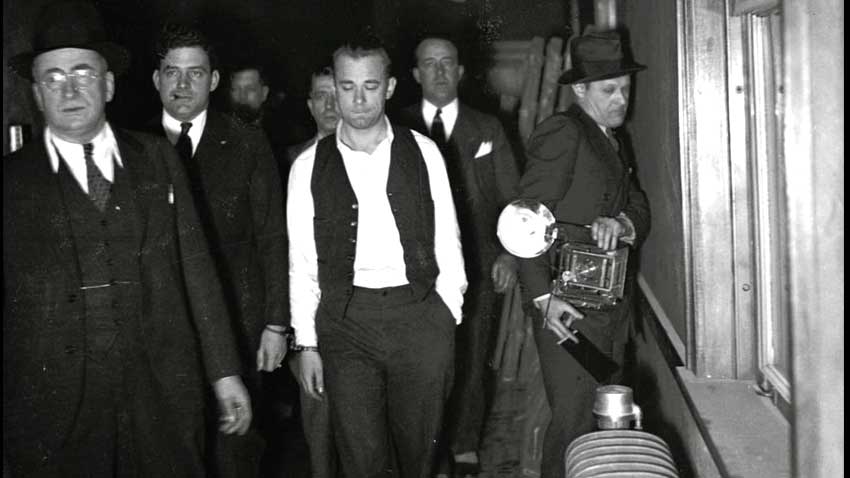
America’s “Public Enemy No. 1,” watched his final movie.
Then exited the Biograph just after FBI agents surrounded the building. Dillinger ran. And was shot multiple times. Dying on the street.
Which ended his criminal career only lasting barely a year! But still, he captured the public’s imagination during the Great Depression.
So, one of those seats heading to Toronto’s Winter Garden Theatre was the last seat Dillinger ever sat in.
They Lost it!
When the seats arrived in Toronto, the restorers noticed one was a different color. It didn’t match the rest, and no one knew why.
Maybe thinking it was an older upholstery for a seat kept in storage as an extra. Or something like that. Just a butch of shrugged shoulders as the seats were sent off for a new upholstery job to match the Winter Garden’s green design.
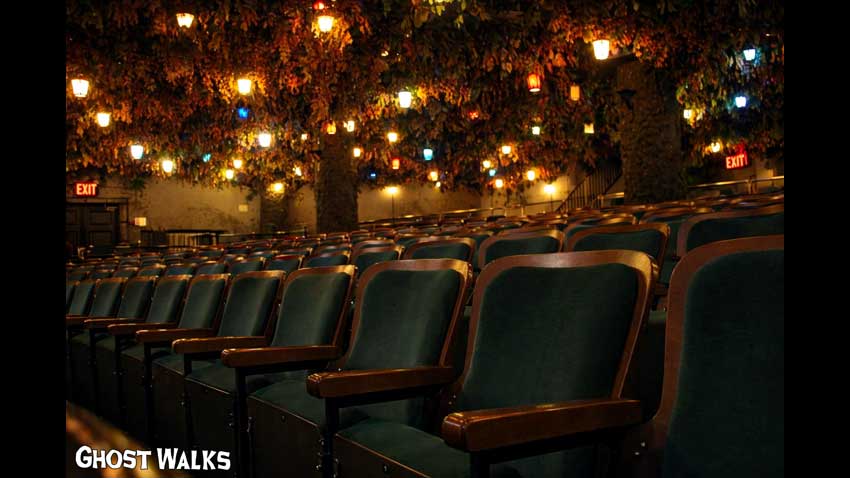
The infamous Dillinger chair vanished into the rows. And we know it’s still there today. Lost, unmarked and blending in with the rest.
A Ghost of the Winter Garden
A theatre house this old naturally contains many ghosts.
The most famous is the Lavender Lady. Believed to be a woman murdered after attending a Winter Garden performance. I talked about her on Episode #117 of the Ghost Guide Daniel Podcast…
Expect a full article on her vivid spirit soon!
Sam the Trombone Player
Then there’s Sam the Trombone Player. A beloved Winter Garden spirit.
Story says Sam performed in the orchestra during the theatre’s Big Time Vaudeville days of the early 1900s.
His life ended in a tragic accident in 1918, when Sam stumbled and fell into the orchestra pit. It was the kind of pratfall that audiences once laughed at during the very shows he performed.
But this time, nobody was laughing.
Employees report hearing faint trombone music drifting from the empty orchestra pit.
During the 1980s restoration, a séance was held using a Ouija board. The contacted spirit identified itself as “Sam”.
Confirming details of his life and death long before he became a well‑known ghost of the Winter Garden.
Harmless and devoted, Sam seems to linger simply for the love of entertainment and music.