
Stratford (Ontario) is a city made famous by the stage. But before it was a destination for theatre-lovers, it was a small settlement carved out the historic, prosperous Huron Tract.
A city with beautiful historic structures has a rich past. Here’s how the Stratford started, through industry and theatre, leading to the many ghosts who remain.
Know a great Stratford location to feature?
Please CONTACT US with the suggestion

by Ghost Guide Daniel
..: Quick Links :..
History | Headless Ghost | Avon Theatre | Queen’s Inn

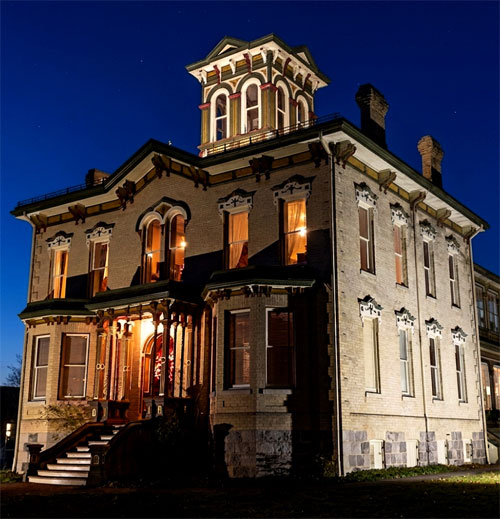
Inside Castle Kilbride Walks
Step inside a Victorian masterpiece after the sun goes down. Very close to Stratford.
Humble Beginnings of Stratford
The story of Stratford begins with the Huron Road. A vital road connecting Goderich to Guelph in the newly formed Huron Tract.
Originally, overseeing the land was the first Director of the Canada Company, William ‘Tiger’ Dunlop. A larger-than-life figure, Dunlop was a close friend of Native leader Joseph Brant (war hero and namesake of Brantford).
‘Tiger’ earned his nickname when serving as a journalist in Calcutta, India. He headed an attempt to clear tigers from Sagar Island. For the tourists. But it didn’t work.
The City of Stratford began to take shape under the leadership of Thomas Mercer Jones. The next head of the Canada Company after Dunlop.
The son-in-law of the influential Bishop of Toronto, John Strachan. Jones reportedly traveled to the area in the early 1830s.
And legend has it that he met a lone settler, and innkeeper, named William Sargint. Gifting him a painting of Playwright William Shakespeare.
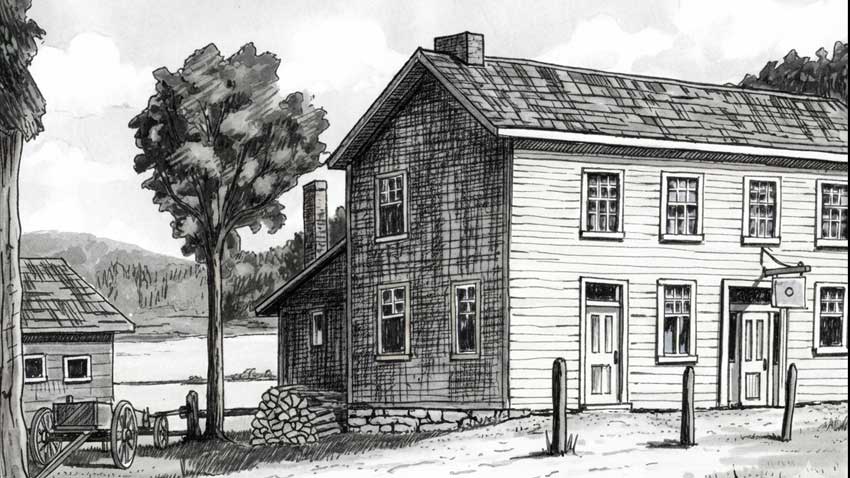
Sargint loved it! Turning his lodging into the town’s first hotel, and calling it the Shakespeare Inn.
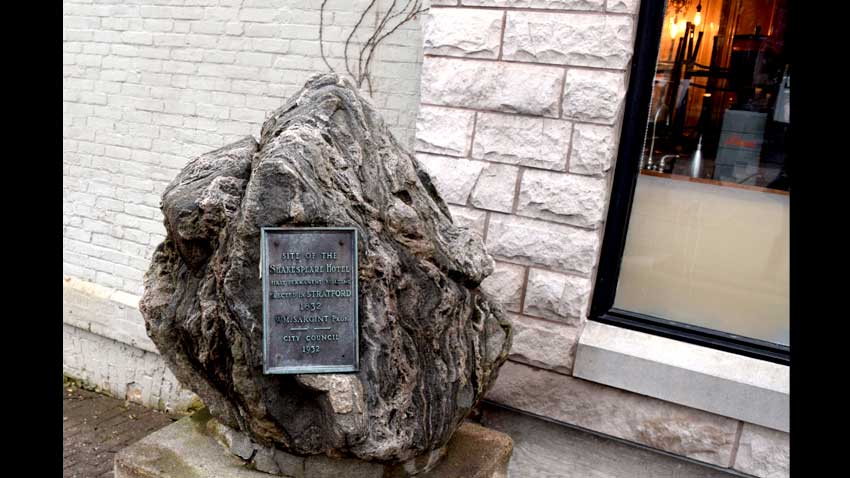
Long gone is the original structure. Now marked by a rock in Stratford’s Memorial Park. This planted the seeds of the city’s identity. The town grew steadily around that inn, but it took another century for the world to take notice.
Pivot to the Stratford Festival
By the early 1950s, Stratford was at a crossroads. The CNR (Canadian National Railway) shops, the city’s lifeblood, were closing. Stratford needed a new industry, and local visionary Tom Patterson had a wild idea … tourism through theatre!
Patterson, a WWII veteran and Maclean’s Magazine reporter, had seen his hometown decline starting with the Depression of the 1930s.
Fueled by a love for Shakespeare, he lured British director Sir Tyrone Guthrie to town. Then in 1953, the first season of the Stratford Festival launched in a massive tent beside the Avon River.
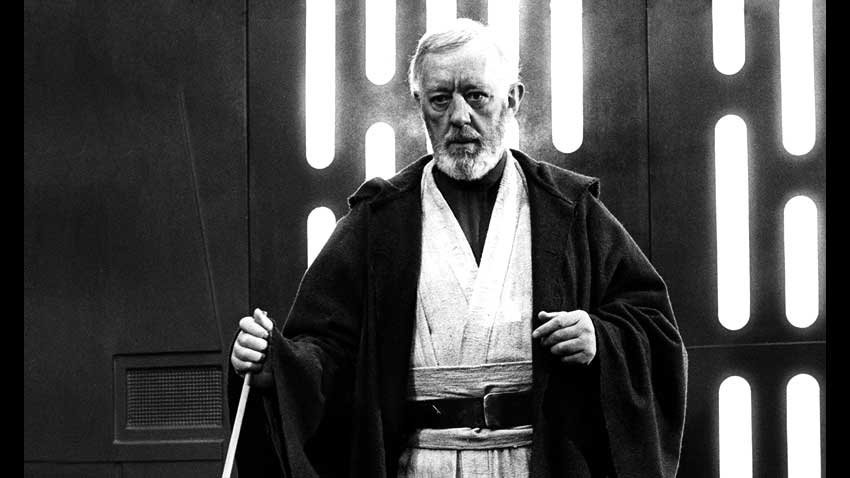
The production was Richard III. Starring a young Alec Guinness (years before he played the legendary Obi-Wan Kenobi in Star Wars).
The gamble paid off. Stratford became a cultural hub for theatre.
Headless Ghost of the Avon River
Every historic city has its ghosts. This Stratford spirit comes from some true grisly history. One of the city’s earliest ghost stories involved a prisoner named Henry Derry. Not long after he died in the Stratford Jail.
In 1876, a horrifying discovery was made at “The Wooden Bridge” (now William Hutt Bridge on Waterloo Street).
A headless body found floating in a coffin, in the water and snagged by the logs.
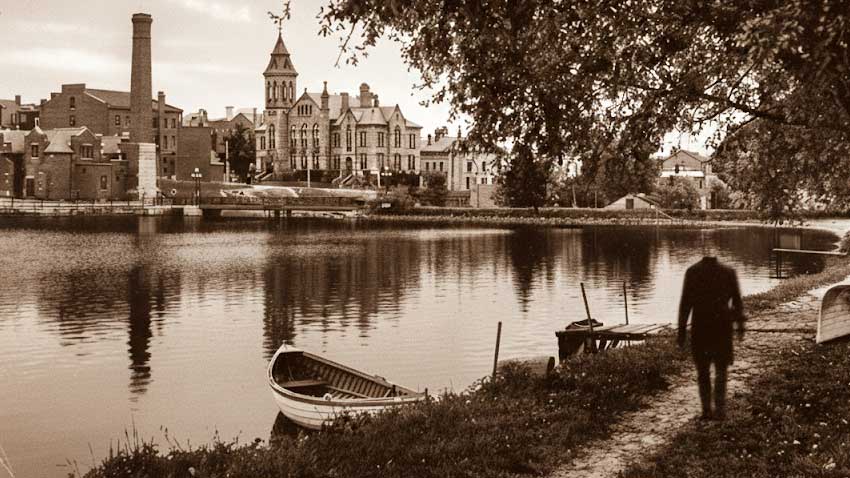
It’s believed a local medical student had dug up Derry’s body from a graveyard for study. Panicked by his crime, the student attempted to sink the body in the river. But it broke loose.
Derry was reburied in Avondale Cemetery, but that’s not where the story ends. For generations, locals reported seeing a headless figure wandering the riverbanks.
And just to add more validity. A skull was unearthed near the William Hutt Bridge in 1980. While never formally tested, authorities stated confidently, “…it’s probably Derry!”
Spirits of the Avon Theatre
But no location in Stratford beats the Avon Theatre for ghosts.
Opened in 1901 as a vaudeville house called Theatre Albert. That’s what it was called when infamous theatre manager, Ambrose Small, owned it.
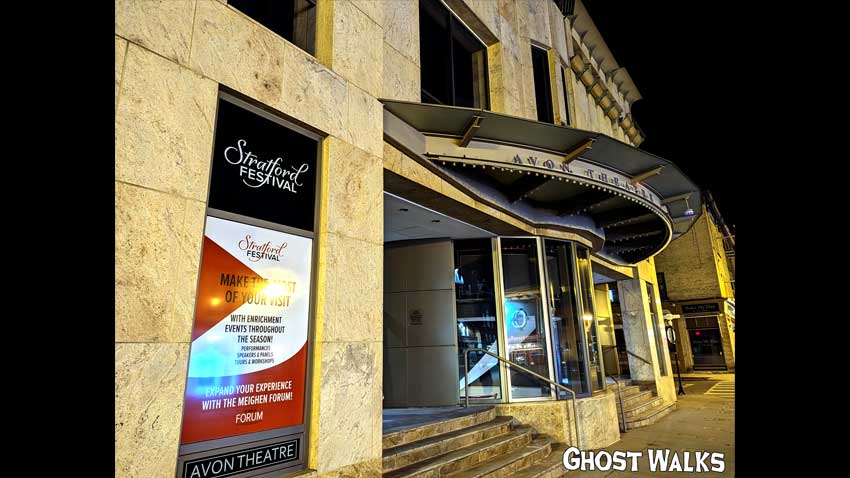
Changed names a couple times before settling as the Avon Theatre in the 1940s.
The Man in the Balcony
The most famous resident ghost is the “Man in the Balcony”.
Guests and staff have reported seeing a man sitting alone in the empty balcony. Seeing a pale face glow in the darkness. Confused, they check on him. Walking up as he offers a blank stare. Getting close as he slowly vanishes.
Believed to be the ghost of a former janitor. A dedicated worker who lived inside the Avon.
Others have suggested the spirit is that of Ambrose Small. However, many of Small’s former theatre seem to claim his ghost (like London’s Grand & Hamilton’s Tivoli).
Why are theatres so haunted?
Side note … theatres are just more haunted for a reason. They are “energetic beacons.”
Thinking of the combined emotional energy of hundreds of audience members. Mixed with the nerves and high-stakes performances of actors.
This creates a concentrated pool of energy drawing in spirits.
Phantom Violinist of the Queen’s Inn
Fittingly, the ghost stories extend to the local lodgings. Such as the Queen’s Inn. The current structure a rebuild in 1905. This was after the original 1858 structure burned down.
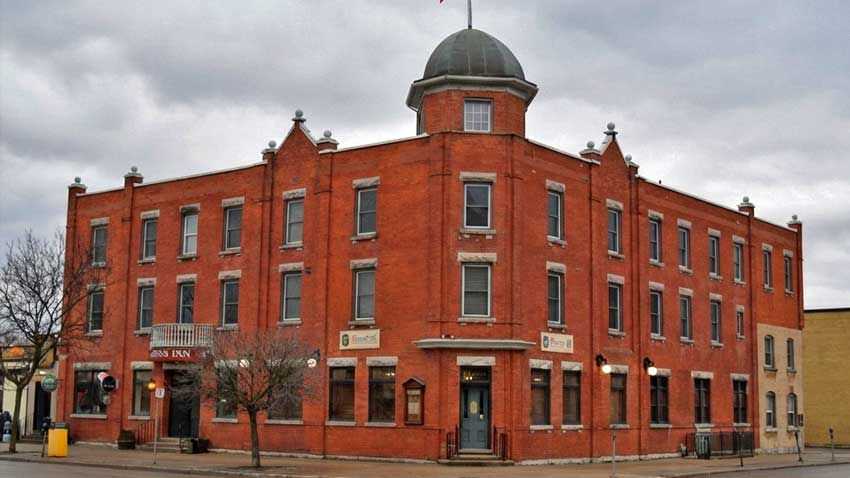
Experiences seem to concentrate on the second floor.
Such as one winter morning, a guest called the innkeeper to complain about loud violin music coming from the room next door.
When questioned by the manager, the guest simply held up the phone. The manager easily heard the music.
He rushed upstairs to confront help, holding the key to the rooms. Getting to the floor and finding the guest in the hallway. Which was in complete silence.
Opening the room, they both found it empty.
Today, the city is far more than just the home of the Stratford Festival. It is a living museum dedicated to the generations who lived and performed there.
Between its striking architecture and its rich store of local lore. Stratford remains a fascinating destination that is well worth the visit.
Epilogue
Why is Stratford considered a city with a town-size population?
Answer (thanks to Eric O) … Stratford is a city because it is a county seat for Perth County.
Inside Castle Kilbride Walks
Step inside a Victorian masterpiece after the sun goes down. Very close to Stratford.