
Edgar Allan Poe remains one of the most iconic figures in American literature. Celebrated as the master of the macabre and the creator of the modern detective story.
Poe’s work redefined Gothic fiction and introduced a level of intensity previously unseen in the 19th century. His unique ability to blend atmospheric horror with precision. Transforming him into a literary legend, and one of America’s first great authors.
The shadows found within Poe’s stories were reflections of his own tragic life. His history is defined by early abandonment, financial instability, and personal loss leading to his undoing.
This article explores the man behind the legend. From an orphaned “Bostonian” to the enduring enigma of his final, mysterious days in Baltimore.

by Ghost Guide Daniel
..: Quick Links :..
ORPHAN | MILITARY | WRITER | DEATH | GHOST

Edgar Allan Poe | Master of the Macabre
Edgar Allan Poe was born in Boston on January 19, 1809. Arriving on the cusp of Capricorn and Aquarius.
The son of actors David and Elizabeth Poe. It’s widely believed he was named after the son of the Earl of Gloucester, in Shakespeare’s King Lear.
Fitting, as drama followed his childhood. Defined by abandonment and loss.
An Orphaned Beginning
Poe was only a year old when his father, David, abandoned the family.
An angry man struggling with alcoholism, David’s departure likely spared the young boy from abuse. But his father’s absence left a permanent mark.
Before Edgar’s birth, David turned his back on a wealthy family and a law career. To pursue acting alongside a woman named Elizabeth. She was a budding stage actress.
Unfortunately, David lacked her talent. And this resentment sent him back to drinking.
The record shows David died only two years after his son’s birth in 1811. As confirmed by Edgar writing a single, haunting line in a random letter…
“My father died in the second year of my age.”
Elizabeth Poe was the “Star of Richmond”
Edgar’s mother, Elizabeth (called Eliza), was a celebrated actress described by critics as an “interesting figure with a sweet, melodious voice”.
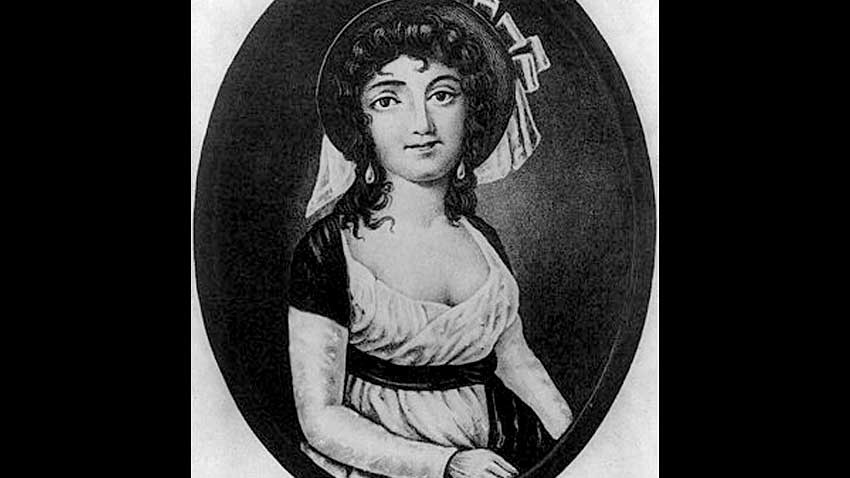
Performing over 300 roles in a storied career. Including singing the lines of Juliet & Ophelia.
By 1811, while performing in Richmond, Virginia, she fell gravely ill. It was while playing Countess Wintersen in The Stranger.
She began coughing up blood. An unmistakable sign of tuberculosis.
As she suffered, the public rallied around the beautiful, dying actress. And during her final months, Edgar was cared for by a Mr. and Mrs. Usher. Yes, same name is immortalized in his gothic masterpiece, The Fall of the House of Usher.
The Ushers
There is question on whether the Usher’s did care for Edgar during his mother’s sickness. Luke and Harriet Usher were fellow actors and close to Eliza.
Some historians don’t believe it. Stating it was a woman named, “Mrs. Richards” who cared for baby Edgar. Lower this to a ‘likely’, along with the connection to the naming of the Usher family in Poe’s book.
Eliza Dies
Despite various benefit performances held in her honor, Eliza passed away in December 1811.
Crazy … David died only days after Eliza. Showing their connection, and coordinated abandonment of Edgar.
And following her death, Edgar was separated from his siblings and taken in by John and Frances Allan, a childless couple from Richmond.
Failure, Passion, and the U.S. Army
In 1826, Edgar Allan Poe enrolled at the University of Virginia. Founded only a decade earlier by Thomas Jefferson.
Poe excelled at languages. However, his foster father, John Allan, only covered a portion of his tuition.
Desperate for funds, Poe turned to his first addiction … gambling. It didn’t work, only deepened his debt.
The mounting debt led Poe to follow in his father’s footsteps. Going to his next addiction … alcohol.
By 1827, he dropped out of school and returned to Boston. During this time, while working as a clerk for a local newspaper. Poe self-published his first collection book, Tamerlane and Other Poems.
Seeking anonymity, he signed the work simply, “… by a Bostonian”.
When money ran out again, 18-year-old Poe enlisted in the United States Army. But he was too young to go without permission. Using an alias, “Edgar A. Perry” and claiming he was 21.
Surprisingly, he excelled in the military, reaching the rank of Sergeant Major in less than two years.
Later he negotiated his way out of the Army. And thanks to assistance from John Allan, he was able to attend West Point in New York.
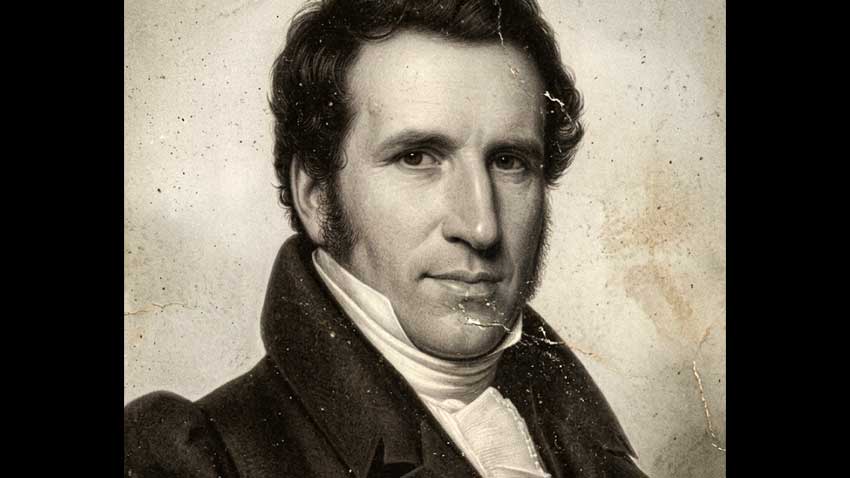
But he didn’t take to the Academy as well as the army. Eventually getting kicked out due to, “gross neglect of duty”.
Tragedy leads to Disinheritance
Tragedy hit him again when his beloved foster mother, Frances Allan, passed away after a long illness.
Poe returned to Richmond to reconcile with John Allan. But the peace was short-lived.
Then Poe announced he was leaving the military (leading to his “neglect of duty”).
John got angry. Withdrawing all his financial support. And their relationship shattered completely when Poe confronted John regarding cheating on Frances during her illness.
This was proven when John remarried only three years after Frances’ death.
John disowned him. And Poe left for New York City!
Rise of a Literary Legend
In the 1830s, American literature was in a state of flux.
Because of a lack of international copyright laws, publishers often pirated British authors like Charles Dickens. Was easier than finding American talent.
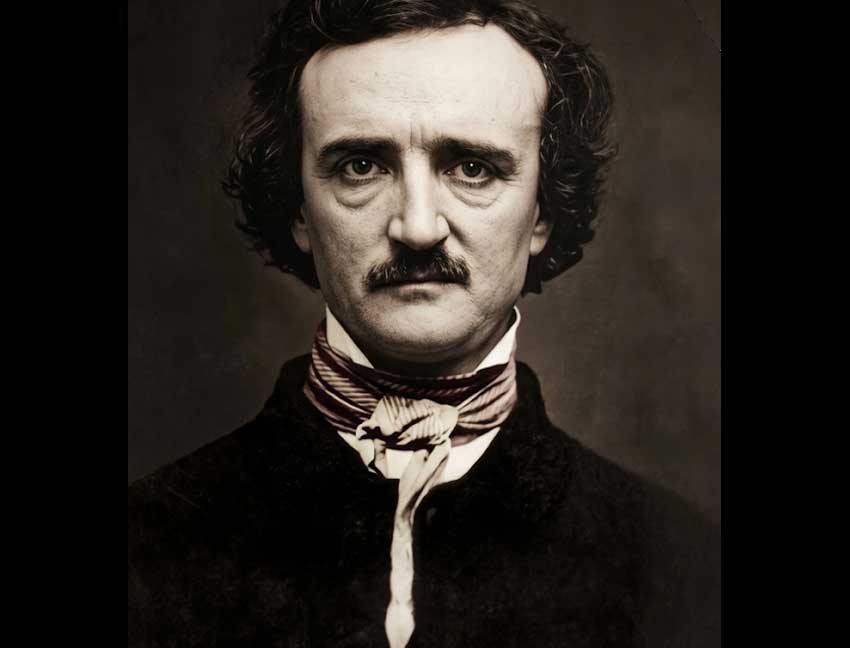
Poe had to be perfect. He pivoted from his beloved poetry to “popular prose”. Only because people preferred it.
Then developing a unique, rhythmic style. Making him one of the first truly famous American authors next to names like…
- Henry Wadsworth Longfellow
- Herman Melville
- Ralph Waldo Emerson
- Henry David Thoreau
- Walt Whitman
Then, of course, there were Nathaniel Hawthorne and Washington Irving, both of whom Poe considered friends.
Controversial Cousin Marriage
In 1835, Poe took an editing position at the Southern Literary Messenger.
It was during this time, he reconnected with his aunt, Maria. Along with her daughter, Virginia Eliza Clemm. Poe’s 13-year-old first cousin.
In 1836, the 26-year-old Poe married his 13-year-old cousin.
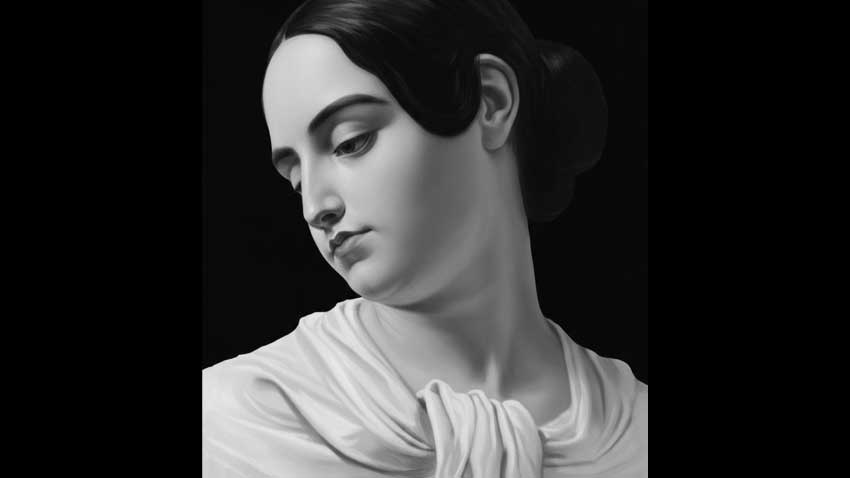
While the nature of their marriage remains a subject of historical debate, their devotion to one another was undeniable. At least for the 11 years it lasted before her untimely death.
The Raven leads to Overnight Fame
In 1845, Poe published The Raven in the New York Evening Mirror. It was a sensation!
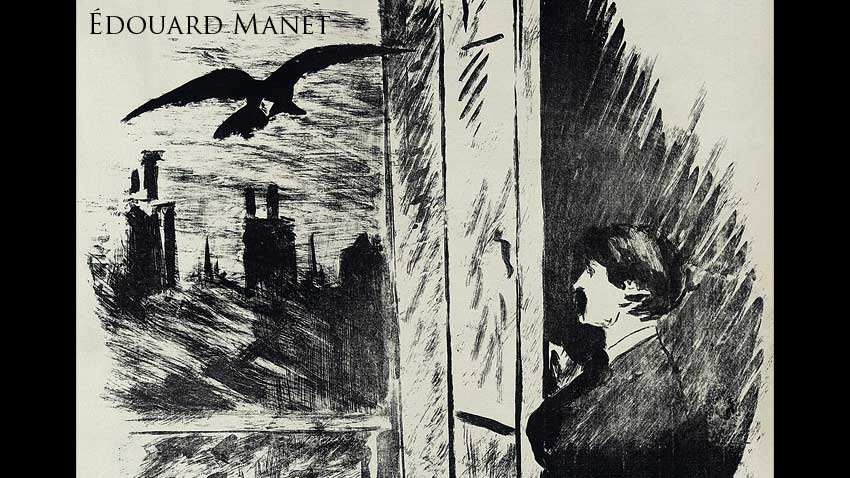
Transforming him from an obscure writer into a household name.
Fans looked for hidden parallels to his wife’s failing health in the poem. As Virgina contracted Tuberculosis in 1842.
However, Poe maintained The Raven was a calculation designed to appeal to the popular tastes of the people.
Mystery of Poe’s Death
Virginia Poe died of tuberculosis in 1847. And Edgar fell into a spiral of depression and alcohol.
On October 3, 1849, Poe was found delirious and dressed in tattered clothes that were not his own. Discovered on a bench outside of Ryan’s Tavern, once on East Lombard Street in Baltimore.
He was rushed to Washington Medical College but never regained full consciousness.
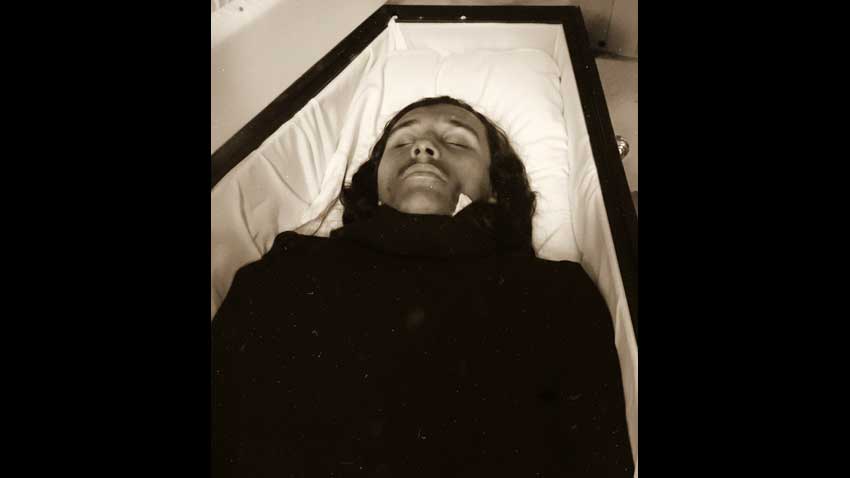
Leading to October 7, when he was said to whisper, “Lord help my poor soul,” just before dying at 40 years old.
To clear confusion … he was not found lying in a gutter. This was embellishment by later biographers of Poe’s life.
“Cooping” Theory of Death
How did Poe end up in that horrible state?
One popular theory is “Cooping”. A form of 19th-century voter fraud.
Thugs would kidnap unsuspecting (and usually drunk) men. Add more alcohol and forcing them to vote at multiple polling stations in different disguises. All for the same candidate.
Which explains why…
- Poe was found near a polling place (Ryan’s Tavern).
- Was highly intoxicated.
- Wearing someone else’s clothing.
It’s a logical explanation. But so tragically unpoetic an end for a historic figure such as Edgar Allan Poe.
Ghost of Edgar Allan Poe
Today, Poe’s spirit, in all ways, lives on in Baltimore.
Mainly in, “The Horse You Came In On”. A strangely named pub claiming to be the last place Poe drank before being found at Ryan’s Tavern.
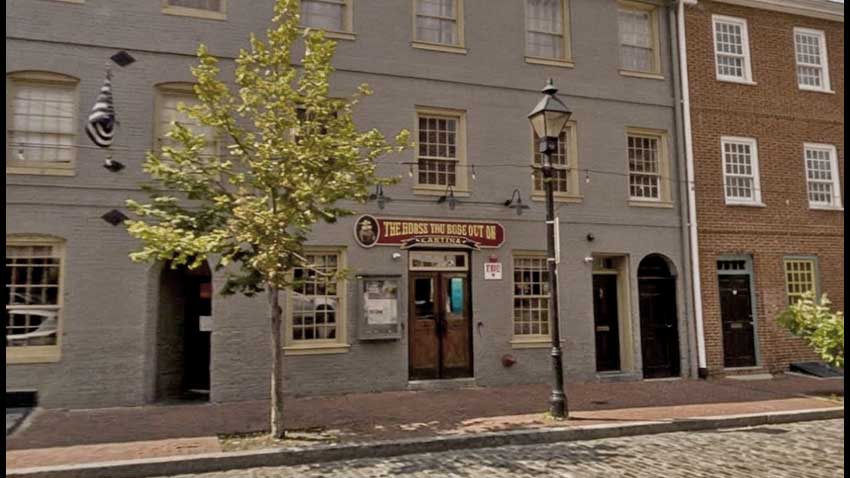
Most likely not, as this pub is located over a 30-minute walk from Ryan’s original location at 44 E. Lombard Street. That doesn’t mean Poe never drank here. Just that it probably wasn’t his last stop.
Doesn’t stop the ghost stories. Staff report mysterious occurrences.
Staff and patrons have reported seeing the ghost of a man in 19th-century attire in the pub. Leading to a seat at the bar marked “Poe’s Last Stop”. A great photo opportunity.
And it’s on this seat that visitors claim to feel pressure, like a hand on their shoulder.
A couple employees have witnessed the cash register drawers fly open. Along with the chandeliers swinging without any wind to cause it.
With a fun tradition … bartenders will sometimes leave a glass of cognac or whiskey out for the writer at closing time. Out of respect … and maybe fear.
Epilogue | Inventing the Detective Genre
Beyond his gothic tales, Poe is credited with inventing the detective story!
His character C. Auguste Dupin, featured in the short story, Murders in the Rue Morgue, published in 1841.
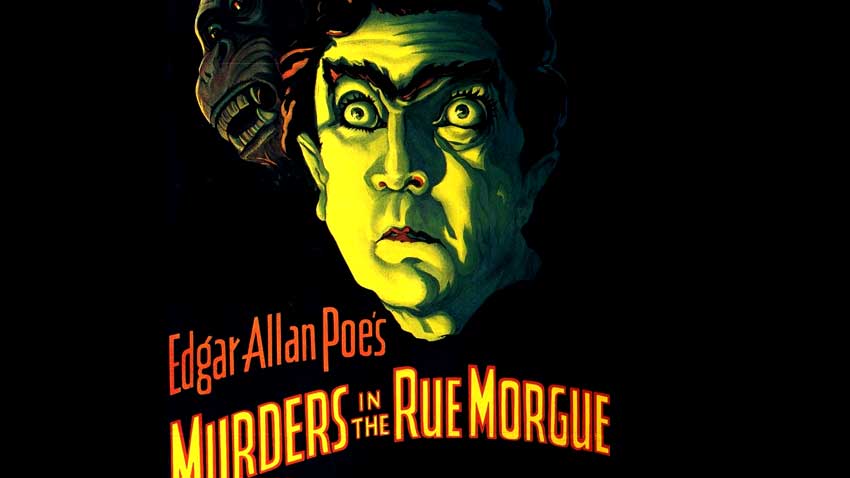
This established the images of the “locked-room mystery”. Along with the brilliant detective who outwits the police.
Sir Arthur Conan Doyle, writer of the Sherlock Holmes mysteries, later remarked that Poe, “… was a model for all time”. Leading to the belief Doyle got the idea for Holmes from Poe’s character, Dupin. The first Sherlock Holmes mystery was written in 1886.